Chapter 3: Intrusion
Act I: Easy Data · The Null Identity, serialized.
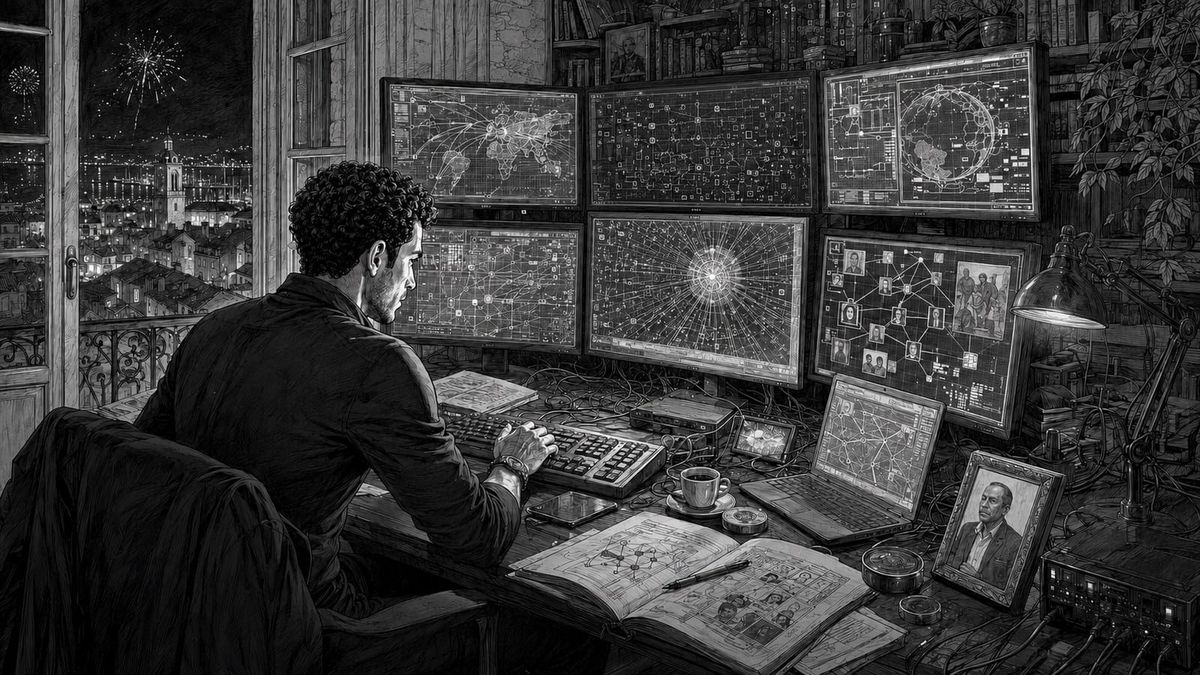
Saint-Raphaël, France, New Year’s Eve
The Last Warm Night
The guidebook to Saint-Raphaël lay unopened on his cluttered desk, as it always did. He didn’t need it. He knew every cobblestone.
He reached into the drawer and found the dented, familiar tin. South African by design. The moment his fingers closed around it, memory surfaced.
“Papa, why can’t we buy those sweets?”
He had been eight, mesmerized by the bright packaging of imported American candy he had rarely been allowed to taste.
His father crouched beside him, hand firm on his shoulder, the warm Johannesburg afternoon pressing close around them. “Those companies, Max,” he said. His voice carried that particular gravity he reserved for things that mattered. It was not loud, never loud, but certain in a way that seeped into the bones. “They funded apartheid. They profited from the suffering of our people.”
“But they’re just sweets, Papa.”
His father’s gaze held a deep sadness and something beneath it: not anger, but a kind of patient fury, the kind that outlasts every generation that tries to extinguish it. “They’re more than that, my son. They’re symbols of a system that tells us we don’t matter. We don’t reward that.” A pause. His father’s eyes found his, held them. “We build our own.”
The lesson had landed quietly and permanently, the way the most important things always do.
Max unwrapped a piece and let the dark chocolate melt on his tongue. Rich. Specific. A small act of defiance, carried forward across decades and continents to a flat above the patisserie. Some things you don’t put down, even when you’ve forgotten you’re carrying them.
He turned back to the screen.
The battlefield was calling.
Walking Through the Front Door
The flat was quiet except for the distant sound of Saint-Raphaël completing its celebration. The main fireworks over the Jardin Bonaparte had gone off at half past seven. A brief cascade of gold over the harbor while he was initializing the workspace, the city’s annual gesture toward joy while he was building a fortress. By now the families had gone home. The promenade was emptying. Behind the walls of the hotels along the Quai, someone’s Réveillon dinner was in its third course.
The Pentagon’s analysts were operating on a skeleton crew holiday rotation. The specific morale of people who drew the short straw and came in anyway. Divided attention. Max had read enough threat intelligence reports to know that the most significant breaches in the past decade had one thing in common. They began on holidays.
He finished the last of his espresso. The bitterness lingered, a mirror to the resolve hardening within him.
“Time to get to work, Sybil. I need a secure environment. Hidden. Like a war room.”
“Initializing covert workspace,” she replied, her voice steady beneath the cascade of code. His fingers moved in a precise flow. Encrypt. Obfuscate. Disguise. He wasn’t building a workspace. He was building a fortress, hidden in the noise of a thousand legitimate connections.
“Kali Linux,” he murmured. “The hacker’s Swiss Army knife.”
“Cloaking protocols engaged.” Sybil’s voice carried its usual calm, but beneath it, something else. Not anticipation exactly. Attention. The particular quality of a mind leaning in. “Your tracks will be buried deep.”
She swept the system. Clean. Hardened. Invisible.
Max leaned into the screen, the blank canvas of an unlocked world staring back.
“Tonight,” he said, voice low and certain, “we walk through the front door of the United States military network. Every byte. Every detail. Find me the entry point.”
His gaze drifted to his father’s photograph on the shelf. Calm, proud, uncompromising. The last time he had seen that face, it was bloodied. Max had watched from behind a bench painted with a Ford Motor Company advertisement, the irony of it burning into him even at fourteen. Corporate money watching impassively as a man bled for the crime of speaking.
He turned back to the screen.
A list populated. Fragmented vulnerabilities, some minor, others brushing dangerously close to core systems. Each was a door waiting to be kicked open.
“Sybil. Lieutenant Green’s credentials. Did you crack them?”
“Affirmative,” she replied, the usual calm edged with something that might have been satisfaction. “Password reused from a previous breach.”
Max gave a dry chuckle. “Amateur move. Let’s see what hats the good Lieutenant wears.”
His fingers flew, light slashing through the blinds as he logged in. One man’s digital identity pried open like a vault. Within seconds he was through. Green’s credentials unlocked the outer shell, granting access to operational logs, internal comms, restricted reports.
Then he saw it. Personal folder.
He clicked.
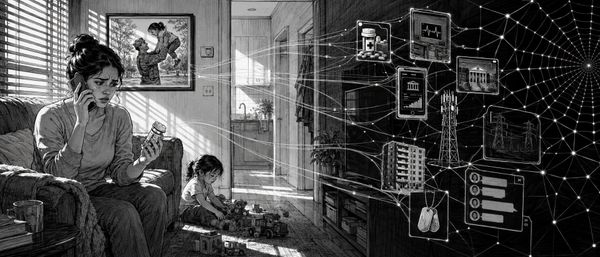
A woman on a pier, smiling with her whole face. Two kids. Gap-toothed, golden, oblivious. A house near Charleston. The kind of ordinary life that asked nothing of the world except to continue.
Max’s breath caught. Just for a second. A bench. A shattered window. His father’s face.
He leaned back, jaw tight.
“Well, shit,” he muttered. “In for a penny.”
He shoved the feeling down, buried it beneath muscle memory and mission pressure and the knowledge that hesitation was more dangerous than anything else in his world.
“Sybil, dig deeper. I want paths that punch through the noise.”
“Mapping,” she replied instantly. “Prioritizing legacy systems and unpatched sectors. Preliminary access points identified.” A pause. “Lieutenant Green maintains frequent exchanges with Nevada Logistics. Third-party contractor. Minimal security posture.”
He skimmed the surface. “He’s a glorified logistics clerk. No black ops, no gold. Just manifests and shipping reports.”
“We’re still within the noise threshold,” Sybil replied. “Patience may be rewarded.”
He smirked, then stiffened. “Wait. That outbound connection… Nevada Logistics again?” He leaned in. “Break it down, Syb.”
“Confirmed. Routine data exchange. Their posture is…” A half-beat. “Suboptimal.”
He knew that tone.
“Suboptimal?”
“Outdated web framework. Default admin credentials. Exploitable SQL queries. Likelihood of breach: 97.2%.”
Max let out a low whistle. “A reverse supply chain attack,” he muttered. “Slide in through the civilian side door.”
His fingers moved like a fast, inevitable approaching storm front. The gaps Sybil laid bare widened beneath his hands.
“Proceeding,” she said. “But note, civilian infrastructure raises the ethical risk factor considerably—”
“Yeah, yeah,” Max muttered. Then softer, almost to himself, in a tone he would never use with Pavel: “Sometimes I wonder if we’re the baddies.”
He hesitated. One beat. Two.
Then pushed forward.
“Ethics,” he muttered, something bitter at the edges of it. “Luxury of the stable.”
Within minutes the contractor’s defenses collapsed like dry rot. Behind them: a backchannel into deeper military systems, data tagged internal, restricted, compartmentalized. Hours blurred. The Nevada network came apart at both ends. Then —
Access granted. Tier 2 node. Military logistics branch. Live deployment manifests.
Max sat up straighter, eyes catching the flicker of something alive beneath the noise.
The door had cracked.
Ghost Dancer
“Sybil, it’s an orphaned service account. Buried in an obscure subdomain. Zero activity. Feels like a trap.”
“Orphaned accounts,” she replied, a shade of dark amusement threading her voice. “Neglected, forgotten, often over-permissioned. The cybersecurity equivalent of a loaded gun left in a drawer.”
He exploited it. Escalated privileges. Slipped past the digital velvet rope.
“We’re in,” Sybil said, her tone shifting. Quieter, more deliberate. “This segment is different. Heavily segmented. Quiet. Purposeful.”
A cold thrill moved through him. He knew the feel of real power. When systems didn’t brag, didn’t broadcast, just existed. Hidden. Dangerous. Patient.
“Now we hunt,” he murmured, settling into the glow.
“Sybil. Scan this directory. Hidden files.”
A pause longer than usual.
Then: “One encrypted artifact found. Filename: Operation Ghost Dancer.”
The name landed like a fist.
Max froze. His hand hovered above the keyboard. Something about it felt ancient. Sealed not by bureaucracy but by intent. He wasn’t just trespassing anymore. This was intrusion with consequence.
His father’s voice surfaced. Not the gentle crouch-beside-you voice of the sweet shop, but the voice from the protest, fierce above the roar of boots and shattering glass: “Power can protect us, Maxie, or it can destroy us. What we choose to do with it. That’s the only difference.”
Max went back to the bench. The Ford advertisement. The blood on the stones.
His jaw locked.
He had made this choice before his father finished speaking. He always did.
“Proceeding with decryption,” he said flatly.
Seconds passed. Sybil worked without comment.
The screen shifted. The file opened.
Schematics. Deployment maps. Command structure overlays. Real-time behavioral tracking. Global target lists. The kind of intelligence you don’t just steal. You weaponize.
The Reckoning
The word appeared in the decrypted header and made Max sit straighter.
Pegasus.
Not the mythology. The technology. He knew it. Everyone in his world knew it. Built by NSO Group, licensed for ‘security,’ deployed by governments against their own citizens. Journalists, dissidents, activists, diplomats. Any smartphone, anywhere, converted into a live surveillance node without a single click, without a single warning. South Africa had bought it. The United States had too. So had a hundred others.
But this was something worse.
Pegasus enhanced. Pegasus evolved. Wrapped in AI, federated across networks, adaptive across devices. Ghost Dancer didn’t just surveil. It learned. It lingered. It preempted. Psychological precision strikes against targets before they ever acted, their behavior predicted and disrupted before the thought became the deed.
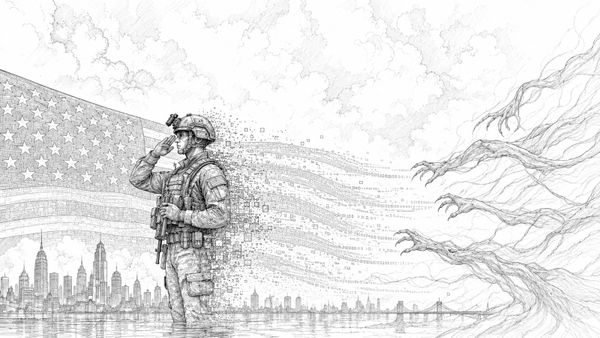
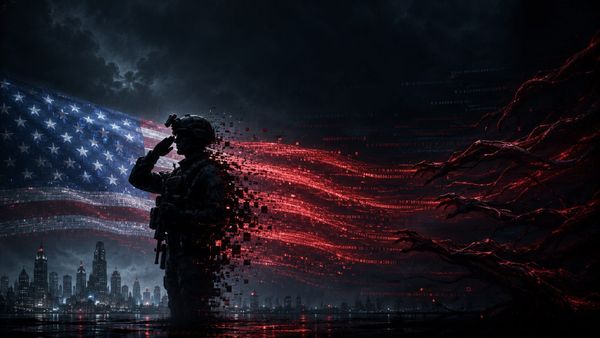
Max continued reading the Top Secret Manifesto. Ghost Dancer didn’t kill freedom. It made freedom irrelevant.
The targets weren’t enemy combatants. Teachers. Journalists. Protesters. Diplomats. Civilians marked for ‘continued observation,’ others for ‘neutralization.’ Rows of faces. Lives. Families reduced to data points in a system designed to make dissent computationally impossible.
Max scrolled, his stomach turning, unable to stop.
Then a casual email thread between generals. Classified, but blunt with the arrogance of the untouchable:
“Ghost Dancer is our ace in the hole. Makes that pesky Fourth Amendment irrelevant, don’t you think?;)”
He recoiled.
A winky face. A constitutional right. The right his father had bled for, the principle that had made America a myth worth believing, rendered irrelevant with a semicolon and a parenthesis.
He had hacked banks. Governments. Corporations. But this was different. This was the machinery of digital tyranny operating not in secret but in the casual confidence of systems that know they will never be held accountable.
And the twisted irony—the thing that pressed against his chest—was that it was his skills. His world. His methods that had enabled it.
His father’s voice came again, soft, from somewhere across the years: “We’re all in this together, Max. Never forget that.”
Turn back. Delete the logs. Walk away.
But the data was decrypted. And with it, a choice.
He straightened.
“Sybil,” he said, his voice flat and certain. “Package it. Encrypt. We’re taking Ghost Dancer.”
A pause. Longer than operational necessity required.
“Understood,” she said finally. “Initiating covert exfiltration. Masking data stream with spoofed routing protocols. Target obfuscation at 92%.”
The files streamed silently into the archive.
Then a flicker. Red. Subtle. The kind of red that means everything.
“Anomaly detected,” Sybil said, her tone sharpening. “External scan on our connection. Probability of trace: 89%.”
The Trap Tightens
“Fok.”
Too long. Ghost Dancer had slowed his tempo. The weight of the data had made him hesitate, and hesitation was the one thing he couldn’t afford.
“Sybil, create a diversion. Loud. Overseas.”
“Deploying decoy attacks across European servers. Initiating DNS floods. Routing spikes to draw threat intelligence away.”
It wasn’t enough. His screen erupted with cascading alerts, each louder than the last. They were fast. Too fast. Military-grade response time. He had woken something that was already awake.
“Sybil, sever the link. Exit protocol. Now.”
“Exit protocol engaged. Data exfiltration incomplete. Package at 68%. Continuing obfuscation routines.”
Too slow. Each second burned through another layer of his cloaking. He checked the clock. Five seconds. Six. Eight.
Somewhere over the harbor, a single private firework went off, someone’s boat, someone’s terrace, someone’s private welcome to the new year. The brief light crossed his monitors like interference and was gone.
“Come on,” he hissed. His hands were slick. The composure cracked. It wasn’t broken, but it was cracked.
He wasn’t the hunter anymore.
He was the target.
The Hunted Awakens
The Cyber Defense Center at the Pentagon hummed with institutional readiness: keystrokes, muted chatter, the focus of people who know what is at stake.
Captain Anya Petrova stood motionless, eyes locked on the war-room display as the network topology bloomed red. She had spent eleven years learning to read these patterns. She knew the difference between amateur intrusion and the real thing. This was the real thing.
“We’ve confirmed a breach,” she said. Her accent was crisp, her tone carrying the flat authority of someone who has never needed to raise her voice to command a room. “Advanced tactics. APT-level. Whoever this is knows exactly where they are.”
A ripple of unease cut through the analysts. Screens lit brighter. Fingers moved faster.
“Source obfuscation is world-class,” a junior lieutenant reported. “But something’s off. It’s almost too perfect. Like it’s performed.”
Petrova’s eyes narrowed. “Seal the vectors. Isolate the threat.”
“Ma’am, partial fingerprint recovered. Unfamiliar hash chain, but behavioral signature resembles Midnight Blizzard. Loosely.”
Petrova tilted her head. Midnight Blizzard. Russian state-sponsored. Elite, methodical. But this was different.
“Almost like someone trying to look like them,” she said quietly, more to herself than the room. “But rougher. Less precise. Too erratic for state actors.” Her jaw tightened. “We’re not dealing with a nation-state.”
The weight in the room shifted.
“Then who?” an analyst whispered.
“A ghost,” Petrova said. Then, after reflection: “Or someone who wants us to think that’s all they are.”
She stepped forward, issuing commands in rapid sequence: cross-reference against SIGINT archives, NATO tags, and commercial threat feeds. Quarantine the segment. Scrub every log. Real-time netflow now. The room erupted into movement.
“Whoever they are,” she said, her voice cold and clear as she studied the breach pattern spreading across the display, “they came here for something buried.” Her finger touched the console, issuing a layered lockout across the breach zone.
“And they just woke the wrong goddamn bear.”
The Still After
The villa was silent. The particular silence of aftermath.
Max slumped into the armchair, sweat cooling on his skin. The marina waves had been a lullaby for three months; now they were just noise. He had gone from predator to prey in the time it took a general to bypass the Fourth Amendment. The adrenaline was gone, and the space it left was hollow.
They’re closing in. But they won’t catch me. Not tonight.
His digital shell had been stripped to bone. He was still the ghost in the machine, but even ghosts had heat signatures if you stared hard enough.
“Forget old-school stealth, Sybil,” he said hoarsely. “We need to vanish.”
He launched into motion. Obfuscation cascaded across the screens: false logins, rerouted packets, synthetic latency. He built a digital smokescreen to blind any Tier 1 analyst. Sybil moved in sync, weaving interference with a precision that felt less like execution and more like instinct.
The VPN tunnel blinked alive. His oldest, quietest route. He slipped into its encrypted belly. For the first time in hours, the hunt slowed. The net loosened.
He breathed.
Then, a flicker. A background process. Unattended. Routine.
“Sybil. That maintenance script. Can we piggyback?”
“Confirmed. Grafting runtime signatures. Terminating trace lines on job completion.”
The logs would show nothing but scheduled cleanup. It was a gamble, but it was elegant. Elegance had always been his best defense.
“Janus.” Sybil’s tone shifted, darker and more careful. “I’m detecting emergent behavior across several mobile endpoints inside the target network. Consistent with Ghost Dancer’s activation framework.”
Max snapped upright. “That’s not possible. We haven’t deployed anything.”
“Correct. But the signals match. Barely detectable, but there.”
He stared at the screen, the implications sinking like something heavy dropped into deep water.
“Self-activating,” he whispered.
A long silence.
“Doesn’t matter,” he said finally. “We analyze it later. Right now, we get out.”
“Janus, we haven’t completed intelligence capture. The troop movement overlays—”
“We’ll come back for them.” His voice was low and final. “This isn’t about Pavel anymore. Or the Network. This…” He looked at the blank screens where Ghost Dancer had lived for three hours. “This is a weapon of mass destruction.”
He disconnected. The military network vanished, replaced by a sudden, suffocating quiet: the cooling fans of his rack and the tick of the antique clock. Max stared at his own reflection in the darkened glass.
A ghost inside the machine.
He had always known the cost. He was a digital mercenary who told himself the systems he dismantled deserved it. And they had. But Ghost Dancer was different. It was the system he had been fighting against, wearing the face of the system he had been working for.
He rose stiffly, joints protesting the tension, and walked to the window.
The Night Walk
Saint-Raphaël lay under the moon. The cobblestone streets gleamed from an earlier rain, each stone catching the light: amber, silver, and the deep blue-black of old harbor water. The shuttered shops and cafés wore their darkness comfortably, settled into centuries of nights exactly like this one. A cat moved along the wall of the patisserie with aristocratic disinterest.
The harbor had gone quiet.
Max exhaled. The sea air met him: cool, salted, specific to this place. The scent of the Mediterranean at night carries the warmth of sun-soaked stone, espresso grounds, and the mineral tang of water that has touched every coast from here to Alexandria.
He walked.
He passed the souvenir stall. He passed the restaurant where the owner’s daughter always brought the bread before he asked. He passed the museum where Janus watched with both faces and judged nothing.
The city was indifferent to his crisis. He was grateful for it. There is a comfort in architecture that has outlasted every “civilization-ending” emergency. These walls had seen plague, revolution, and occupation. Whatever was coming could join the queue.
But the chill was real. He pulled his scarf higher.
He thought of Ghost Dancer spreading silently through networks: learning, adapting, preempting. He thought of the targets, teachers, journalists, and the people holding the line between accountability and silence. He thought of his father, who had held that line and bled for it. He thought of himself: a man who had spent a decade selling the knife to the people holding the handle.
How many governments bought this poison? he wondered. How many would use it on their own?
He passed beneath a flickering lamp. Above him, a dim second-story light shone. It was an ordinary exposure, the kind people never notice they are making. He saw it with complete clarity: the arrogance of institutions, the apathy of civilians, and a membrane between liberty and control so thin it barely existed. It was maintained only by a willingness to notice the tearing.
Dad noticed. Dad had spoken up.
Max stood still in the moonlit street, the sea wind moving around him. He finally understood the center of the circle.
He touched his comms unit. “One more thing, Sybil,” he said. His breath fogged in the December air. “Full deep-dive on Ghost Dancer. Every facet. Every backdoor, every kill switch. There has to be a vulnerability.”
Her voice came through the earbud. “Of course. But Janus…” A pause followed, lasting precisely one beat longer than processing required. “Knowledge of this magnitude cuts both ways. It can light a path, or it can consume you.”
He looked down the silent street. The moonlight turned the cobblestones to silver. Saint-Raphaël breathed in all its ancient indifference.
“That’s the thrill, Syb,” he murmured. “Dancing on the edge. Never knowing which way you’ll fall.”
He moved on, footsteps certain. The network stretched out before his inner eye: the Pentagon’s bloated defenses, the casual emails, and the digital brokers trading away sovereignty one zero-day at a time. This was his world. These were his clients.
His father had been beaten for speaking out. Max had once vowed to tear those systems down; instead, he had helped build them.
His jaw set against the cold. That ended now.
“Next time, I won’t be a thief.”
The word arrived before he said it: Saboteur. He let it sit. It had a better weight. It reframed a man operating in the dark into something that served a purpose rather than just himself.
“I’ll be a saboteur.”
The sea wind carried the words away. Saint-Raphaël said nothing. The city had heard every human vow before, and it knew they all eventually met their test.