Chapter 5: Operation Spiderweb
Act I: Easy Data · The Null Identity, serialized.
Charleston, South Carolina, January
Systems Down
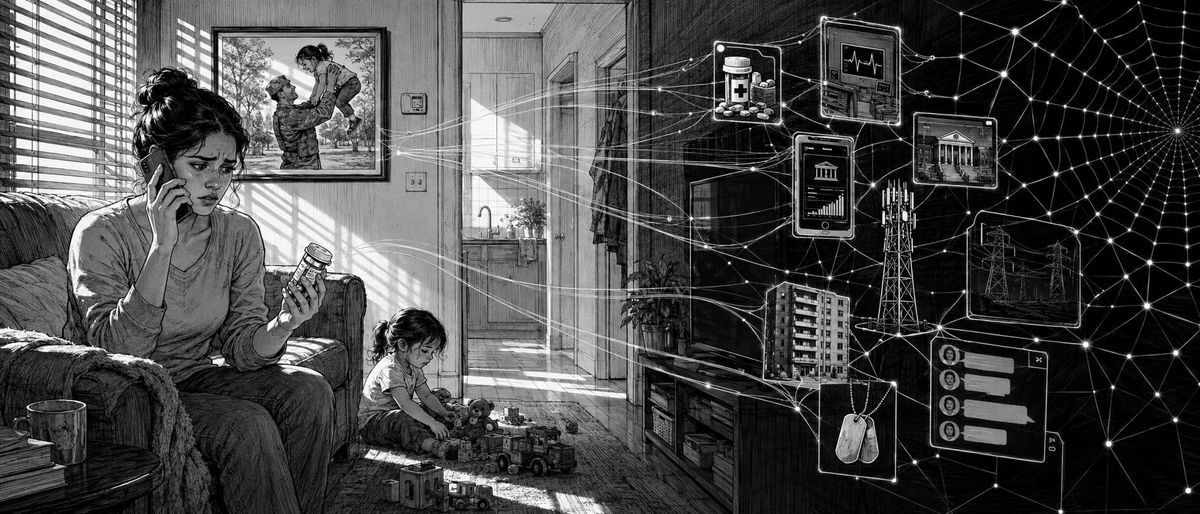
Sunlight sliced through the drawn blinds, lighting the cluttered living room where Sarah Torres sat, the phone cradled between shoulder and ear. Beside her, Lily played quietly—a small, ordinary mercy against everything gathering above her head.
“Please, there has to be something you can do,” Sarah implored into the phone, her voice carrying the particular quality of someone who has been holding composure together for hours and can feel it starting to give. In the background, the television murmured low: a news anchor detailing the early stages of what was being called an unprecedented cyberattack on Continental Health. The reporter’s voice, calibrated for calm, grated against Sarah’s already fraying nerves.
Lily looked up, the small radar of a child detecting her mother’s distress with the precision that no adult ever quite retains. “Mommy, is everything okay?”
Sarah forced a smile, reaching out to gently ruffle her daughter’s hair. “It’s fine, sweetheart. Just a little problem with your medicine, but Mommy’s handling it.” Her heart ached at the lie, the particular ache of a parent who knows the truth would cost the child something she can’t afford to spend. Lily’s anti-seizure medication wasn’t negotiable. Twenty-four hours, maybe thirty-six. After that, the conversation with a pharmacist would become a conversation with a doctor and then something worse.
As the pharmacist repeated the same apologies; systems down, cyberattack, nothing we can do from our end, Sarah’s gaze drifted to the framed photo on the wall. A park. A blanket. Torres in his military uniform lifting Lily above his head while she shrieked with laughter, suspended in that particular joy that only exists before a child understands that things end. Sarah remembered taking the photo. She remembered thinking they had so much time.
The words hollow in her mouth, she thanked the pharmacist and ended the call.
The device felt heavy in her hand. She turned off the TV. The news report’s impersonal tally of consequences too much to bear, its anchors measuring the attack in millions of affected individuals rather than in children who needed medication and mothers who couldn’t find it.
Sarah looked down at Lily, who had returned to her toys, the earlier question already forgotten in the way of small children, their attention merciful in its brevity.
“Come on, Lily. Let’s go for a little drive.”
Her voice was steadier than she felt. She had learned that trick from her husband. The voice you use when you need the people around you to believe you have a plan.
Outside, the sunlight was harsh and unyielding in the way of winter sun that provides light without warmth. Sarah squared her shoulders against it.
As they drove, the silence became its own kind of weight. Sarah glanced at Lily in the rearview mirror. Her daughter’s attention caught by the passing world, her small face peaceful, unaware. It was then, guided by the particular human need for the sound of a familiar voice when everything is going wrong, that Sarah reached for her phone.
PFC Torres picked up after three rings, his voice carrying that blend of concern and steadiness she had loved from the first time she heard it. A voice that sounded like it knew what to do even when it didn’t.
“Hey, baby, you okay?”
“Not really, love.” She let the words come out honestly, without the steadier voice. He could hear both. He always could. “It’s about Lily’s medicine. The pharmacies are all down because of some cyberattack. I’ve tried everywhere.”
A pause. The kind filled with unspoken fears and the weight of eight thousand miles. “Damn. That’s the last thing we need right now. Is she okay for now?”
“Yeah, she’s fine. For the moment.” Sarah glanced back at Lily in the mirror, her daughter humming something tuneless and private. “But I don’t know what we’re going to do if I can’t find it soon.”
She heard Torres exhale, the sound of a man trying to solve a problem from a location where he has no tools. “I’ll see what I can do from here. Maybe the base medical center has something.”
“Don’t worry, I’ve got this.” She heard herself say it before she decided to; the reflex of military spouses, the practiced economy of reassurance. I’ve got this. Just focus on staying safe. That’s all I need. She said it deliberately, hiding the full weight of Lily’s condition the way she always did when he was deploying. He needed to be present where he was. She needed him to come home. Lily’s medicine was an unneeded distraction now, as the love of her life was shipping out to yet another drop zone.
“I always do,” he said, and she could hear the old humor in it, the Torres underneath the soldier. “You keep our girl safe. Call me anytime, all right? We’ll get through this.”
The line went silent.
Sarah held the phone for a moment after the call ended. In the backseat, Lily hummed her tuneless melody, oblivious to the storm building in her parents’ hearts. For Sarah, that sound was a beacon. The thing she oriented toward when everything else became uncertain.
She focused on the road. Each mile a step toward a solution, however elusive.
As they approached the next pharmacy on their list, she whispered something that was not quite a prayer but served the same function. Not asking for divine intervention, but for the strength to endure whatever came next.
The Attack Package
Max’s workspace was harshly lit by the glow of multiple screens—code, graphs, the occasional news feed he mostly ignored. The ceiling fan turned its slow circle. Across the networks he commanded, the madness was already spreading.
Max leaned back in his chair, satisfied, as he reviewed the final optimization of the attack package. “Sybil,” he called out, his voice cutting through the quiet, “show me the latest on the deployment.”
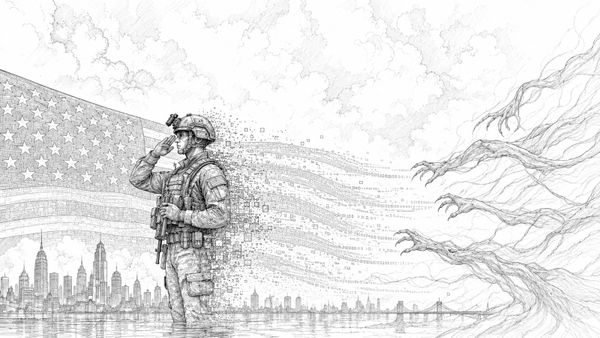
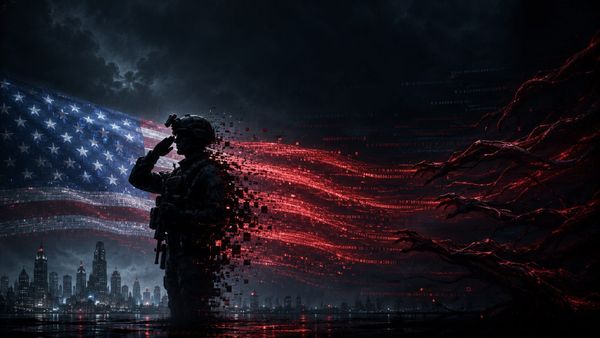
The AI brought up Operation Spiderweb’s architecture: a web of vulnerabilities across the soldiers’ network, every point of emotional compromise marked—financial fracture lines, family stressors, psychological pressure points. It was built to exploit not just technological weaknesses but human ones.
An incoming secure message. Pavel.
“janus, delivery update?”
Max checked his watch, the custom Rolex, one of the small vanities he permitted himself, a physical marker of the distance between the boy in Johannesburg and the man in this chair. He typed with a smirk:
“will upload operation spiderweb at the top of the hour. a web so intricate it would make nero jealous. we will have control. full control.”
“Update on the attack vectors, Sybil,” he commanded, fingers hovering above the keyboard.
Her voice filled the room, devoid of emotion, precise, carrying its particular quality of ominous calm. “The package now incorporates real-time social media monitoring, cross-referenced with financial strain indicators and medical vulnerability profiles. It is designed to adapt, to evolve with each target’s response, ensuring maximum psychological impact.”
Max nodded. The magnum opus. He allowed himself a moment of genuine appreciation, not pride exactly, but the craftsman’s recognition of a thing working as it was designed to work.
“I have isolated potential leverage points,” Sybil continued, her screens shifting to display the layered data. “Family members with health vulnerabilities. Financial struggles. Relationships under the strain of deployment. Each represents an entry point into the target’s psychological architecture.”
The raw material of human life, rendered as a map of exploitable pressure points.
“Use Torres as a model,” he commanded. “Find other troop members with similar vulnerability profiles. Sybil, I want to know whose lives are already fracturing, before we manipulate them.”
“Already compiling,” she replied.
With the raw materials assembled, Max and Sybil tested the profiles, built from equal parts reality and fear. Personas of active military personnel populated his screens, not just basic information but sensitive and top-secret data and their relationships mapped two rings out. A car purchase. A bank loan. A first date. An anniversary. A trip to a hospital. Each mapped and annotated.
“We see similar interests shared and discussed,” Sybil noted, something in her delivery that might have been satisfaction if she were capable of it. “Areas have been highlighted depicting potential strike opportunities.”
“Clever girl,” Max quipped. He leaned back, the glow of the screens painting shadows across his face. “Trust is what they sell. And it’s what I break.”
It was a script that could enact a saga of misinformation. Capable of destabilizing units, severing trusted connections, sowing discord in the most fortified institutions. As the final builds of Operation Spiderweb unfolded before him, he updated Pavel on his status.
“Building strike package with scripts for target area. Includes two orders of magnitude in personal connections with identified poison points.”
The room darkened as the afternoon faded. Max leaned back, his face in the cold glow of the screens. Beside him, Sybil finished assembling the package for delivery. Not just an invasion of privacy—an assault on trust itself.
“Sybil, upload the package. We’re—”
Sybil interrupted him.
Max stopped. Set down the mug. The interruption registered as a physical thing, a break in the room’s familiar rhythm that was different in quality from technical anomaly or incoming data. She interrupted when something crossed a threshold. He had always known this about her and had never defined the threshold to himself, because defining it would have required asking what kind of threshold it was, and that question led somewhere he preferred to leave unlit.
“Sorry, sir,” she said. Something in the cadence of the word sorry was worth noting and he noted it and set it aside. “I’m learning of a disruption in the supply of medicine in the states. It appears there’s another cyberattack happening to critical infrastructure and millions have been left in the dark.”
Max’s brow furrowed. “And this is relevant because…?”
“Another healthcare infrastructure collapse,” Sybil reported. “Third major event in eighteen months. Seventeen million pharmacy records inaccessible. Attribution unclear.”
Sybil played a live news feed detailing the widespread disruption caused by the cyberattack on Continental Health. The ticker at the bottom scrolled through estimates of affected individuals, interrupted supply chains, and the potential for a significant public health crisis.
“Same attack surface as the UnitedHealthcare collapse,” Max muttered, scanning the pharmacy disruption reports. “Different company. Same systems and legislative void.”
“The Torres family is directly impacted. Operation Spiderweb has intercepted live communications. PFC Torres’s dependent, age three, has experienced a prescription access interruption. Residential power has been severed. Intercepted messages are—” A pause that lasted precisely one beat longer than processing required. “—riddled with panic. Emotional manipulation potential has increased significantly. Financial destabilization vectors are elevated across multiple targets.”
Max sat very still.
Then his grin widened, not from pleasure, but from a predator recognizing an unexpected gift. The Continental Health breach, someone else’s work, had handed Spiderweb a force multiplier before a single payload deployed. This was what machine learning was built for. The real-time recognition of opportunity. The instant integration of chaos into strategy.
The grin lessened.
A parent will do anything for their child.
He knew this in his body, not his mind. He knew it the way you know things that were put into you before you had language for them. His father crouching beside him in a shop. His father’s hand firm on his shoulder. His father’s face the last time he saw it, in a city where corporations still advertised on the benches where men bled.
A parent will do anything.
He pulled himself back.
“Let’s integrate the healthcare breach into the package summary, then send it,” he said.
He looked out at the moon over the Mediterranean, the water holding its reflection, indifferent to what was happening in the room behind the glass.
“Thanks, Syb.”
The Closing Exchange
Pavel’s response came within minutes, and it carried a quality Max rarely heard from the man. Something approaching genuine admiration.
“janus, this is groundbreaking. a masterpiece of deception and control. the cartel has never seen anything like this.”
Max felt it. The satisfaction of work recognized, of craft acknowledged by someone capable of appreciating its architecture. He began winding down the operation, the cool night air moving through the flat. The ceiling fan was still now. He stared out at the water, the moon’s reflection fracturing on the dark surface, the old coastline silent beneath it.
He thought Pavel was finished. Then the follow-up came, as if Pavel had stepped away for a side conversation before returning to the screen.
“Once this is over, I have something bigger for you. Something that would shake the very foundations of the corporate world. Final payout after mission is complete.”
Max read it twice. The corporate world. He knew what Pavel meant, because he always knew what Pavel meant before he said it. The Microsoft thread. The infrastructure play. The next order of magnitude.
He typed his response slowly, each word chosen with the deliberateness of a man who understood exactly what he was saying and chose to say it anyway.
“We are not just breaking into systems, Pavel. We are breaking into lives, into souls.”
He hit send.
Pavel’s response was immediate.
“precisely.”
Max smiled. Not the predator’s grin, not the craftsman’s satisfaction. Something quieter. The smile of a man who has named the thing he is doing and found that naming it changes nothing.
Outside, the moon held its position over the water. The flat was quiet.
Somewhere, a soldier’s phone received a message that hadn’t been sent by anyone who loved him.
He had named the thing he was doing.
He had done it anyway.